Table of Content Filters
Select the criteria for articles to view

Number of articles displayed:
86
Articles List


Category:
Logistics Strategy
SCOR Process:
Fulfill, Orchestrate
Level:
Exam-Ready
3PL vs 4PL Logistics Providers
3PL vs 4PL Logistics Providers — External logistics providers can perform individual logistics activities or coordinate a broader set of logistics resources. This guide distinguishes execution-focused third-party logistics from more integrative logistics-provider models.

Category:
Supply Chain Risk
SCOR Process:
Orchestrate, Plan, Source, Fulfill
Level:
Exam-Ready
Business Continuity and Resilience
Business Continuity and Resilience — Business continuity planning prepares the organization to maintain or restore critical supply chain capabilities when disruptive events occur.

Category:
Strategy & Governance
SCOR Process:
Orchestrate, Plan
Level:
Exam-Ready
Business and Supply Chain Strategy
Business and Supply Chain Strategy — Supply chain strategy must align with organizational and business strategy. The supply chain then develops the capabilities needed to support competitive priorities, customer value and long-term objectives.

Category:
Operations & Capacity
SCOR Process:
Plan, Transform, Orchestrate
Level:
Exam-Ready
Capacity Management
Capacity Management — Capacity must be planned, managed and controlled at several levels, from long-range resource planning through rough-cut and detailed requirements planning to daily execution control.

Category:
Sourcing Strategy
SCOR Process:
Source, Orchestrate
Level:
Exam-Ready
Category Strategy for Sourcing
Category Strategy for Sourcing — Category strategy segments purchases so strategically important or high-risk materials receive the right level of analysis, relationship management and sourcing attention.

Category:
Sourcing Governance
SCOR Process:
Source, Orchestrate
Level:
Exam-Ready
Contracts and Purchase Orders
Contracts and Purchase Orders — Contracts formalize the buyer-supplier agreement, while purchase orders operationalize purchasing requirements. Strong contract management preserves accountability, performance visibility and continuity throughout the relationship.

Category:
Customer Relationships
SCOR Process:
Orchestrate, Plan, Fulfill
Level:
Exam-Ready
Customer Relationship Management
Customer Relationship Management — Customer relationship management coordinates information and interactions so the organization can understand customer needs, manage service and build stronger relationships.

Category:
Customer Relationships
SCOR Process:
Order, Fulfill, Orchestrate
Level:
Exam-Ready
Customer Relationship Management (CRM)
Customer Relationship Management (CRM) — Customer relationship management coordinates the processes, information and interactions used to acquire, understand, serve and retain customers. CRM supports the supply chain by connecting customer knowledge with planning and execution.

Category:
Customer Relationships
SCOR Process:
Orchestrate, Plan, Fulfill
Level:
Exam-Ready
Customer Segmentation and Customer Relationships
Customer Segmentation and Customer Relationships — Customer segmentation groups customers with similar needs or value characteristics so service, relationship and supply chain policies can be designed appropriately.

Category:
Customer Relationships
SCOR Process:
Order, Fulfill, Orchestrate
Level:
Exam-Ready
Customer Segmentation and Customer Relationships
Customer Segmentation and Customer Relationships — Customer relationship strategy begins with understanding that customers differ in needs, value and service expectations. Segmentation helps the supply chain apply the appropriate relationship and service model to different customer groups.

Category:
Customer Relationships
SCOR Process:
Fulfill, Orchestrate
Level:
Exam-Ready
Customer Service Metrics and Performance
Customer Service Metrics and Performance — Customer service performance should be measured against the service promises made to customers. Metrics help reveal reliability, responsiveness and gaps that require improvement.

Category:
Demand Management
SCOR Process:
Plan, Order, Fulfill, Orchestrate
Level:
Exam-Ready
Demand Analysis → Demand Management Loop: Turning Signals into Decisions (and Decisions into Learning)
Close the loop between analytics and execution: how to translate demand signals into decisions, align Sales/Marketing/Finance/Supply, and continuously learn from actuals to improve service, cost, and cash.

Category:
Distribution
SCOR Process:
Fulfill, Plan
Level:
Exam-Ready
Distribution Services and Delivery Patterns
Distribution Services and Delivery Patterns — Distribution services connect inventory locations with customers through delivery patterns designed around service, geography, order characteristics and cost.

Category:
Technology & Digital Supply Chain
SCOR Process:
Orchestrate, Plan
Level:
Exam-Ready
Emerging Technology Trends
Emerging Technology Trends — Emerging technologies are changing how supply chains sense, analyze, decide and execute. CSCP highlights cloud computing, AI, machine learning, analytics, sensors, telematics, control towers and other technologies that improve visibility and automation.

Category:
Technology & Data
SCOR Process:
Orchestrate, Plan, Source, Transform, Fulfill
Level:
Exam-Ready
Emerging Technology Trends in Supply Chain
Emerging Technology Trends in Supply Chain — Emerging technologies can improve visibility, automation, analysis and coordination, but their value depends on how well they solve business problems and integrate with supply chain processes.

Category:
Technology & Visibility
SCOR Process:
Orchestrate, Plan, Source, Order, Transform, Fulfill, Return
Level:
Exam-Ready
End-to-End Connectivity and Visibility
End-to-End Connectivity and Visibility — Connectivity and visibility use supply chain technology, shared information and disciplined data management to improve response speed, coordination and event awareness across the network.
Category:
Planning & Integration
SCOR Process:
Orchestrate, Plan, Source, Order, Transform, Fulfill, Return
Level:
Exam-Ready
End-to-End Supply Chain Integration
End-to-End Supply Chain Integration — End-to-end integration connects planning, sourcing, ordering, transformation, fulfillment, returns, information and relationships so decisions support total supply chain value rather than isolated functions.

Category:
Planning & Integration
SCOR Process:
Plan, Order, Source, Transform, Fulfill, Return, Orchestrate
Level:
Practitioner
End-to-End Supply Chain Planning Stack: Strategy to Execution
This article explains the full planning stack from strategy through S&OP, master scheduling, MRP/DRP, and daily execution control, including how S&OE closes the loop, where capacity checks belong, and what governance rules prevent constant firefighting.
Category:
Performance & Metrics
SCOR Process:
Orchestrate, Plan
Level:
Exam-Ready
Financial and Operational Metrics
Financial and Operational Metrics — Supply chain managers need to understand the financial consequences of operational decisions. This guide connects cost accounting, financial reporting and operational measures for quality, productivity and asset management.
Category:
Planning & Forecasting
SCOR Process:
Plan, Orchestrate
Level:
Exam-Ready
Forecasting Methods
Forecasting Methods — Choose forecasting methods to fit the data, demand pattern and decision horizon. This guide compares qualitative, time-series, associative and combination approaches and explains how to test, adjust and improve forecasts.
Category:
Planning & Forecasting
SCOR Process:
Plan
Level:
Exam-Ready
Forecasting Principles and Process
Forecasting is a core demand-planning activity. Learn the CSCP forecasting principles, the 10-step forecasting process, qualitative and quantitative methods, and the exam cues that distinguish good forecasting practice.

Category:
Trade & Compliance
SCOR Process:
Fulfill, Orchestrate
Level:
Exam-Ready
Import/Export Regulations and Documentation
Import/Export Regulations and Documentation — International trade requires compliant documentation, customs processes and an understanding of duties, taxes, terms and regulatory responsibilities.

Category:
Planning & Integration
SCOR Process:
Orchestrate, Plan
Level:
Exam-Ready
Integrated Business Planning and Decision Making
Integrated Business Planning and Decision Making — Integrated planning connects demand, supply and financial views so leaders can make cross-functional decisions using a common set of assumptions and priorities.

Category:
Inventory Management
SCOR Process:
Plan, Source, Transform, Fulfill
Level:
Exam-Ready
Inventory Management Fundamentals
Inventory Management Fundamentals — Inventory exists to support operations and customer service, but it also consumes cash, space and management attention. This guide explains why inventory is held, the main inventory functions and the decisions supply chain managers must balance.

Category:
Inventory Management
SCOR Process:
Plan, Source, Fulfill
Level:
Exam-Ready
Inventory Replenishment Strategies
Inventory Replenishment Strategies — Replenishment strategies determine when and how much inventory to order. This guide connects demand variability, lead time, reorder points, safety stock and review systems to service and inventory performance.

Category:
Inventory Management
SCOR Process:
Orchestrate, Source, Transform, Fulfill, Return
Level:
Exam-Ready
Inventory Traceability, Accuracy and Disposition
Inventory Traceability, Accuracy and Disposition — Traceability and inventory accuracy support reliable planning, execution and compliance. This guide covers identification, physical control, record accuracy, cycle counting and the disposition of unusable or obsolete inventory.

Category:
Supply Chain Relationships & Collaboration
SCOR Process:
Plan, Source, Orchestrate, Transform, Fulfill
Level:
Exam-Ready
Keiretsu-Style Networks:
A practical guide to keiretsu-style supplier ecosystems: how they work, how to measure value vs. lock-in risk, and how to apply the pattern responsibly in modern global networks. Managing Strategic Supplier Ecosystems Without Losing Agility.

Category:
Logistics Strategy
SCOR Process:
Plan, Fulfill, Return, Orchestrate
Level:
Exam-Ready
Logistics Strategy and the Logistics Value Proposition
Logistics Strategy and the Logistics Value Proposition — Logistics integrates warehousing, transportation and related flows so the supply chain can meet customer service requirements at an appropriate total cost. The logistics value proposition balances service and cost in support of strategy.

Category:
Logistics Strategy
SCOR Process:
Fulfill, Orchestrate, Plan
Level:
Exam-Ready
Logistics Strategy and the Logistics Value Proposition
Logistics Strategy and the Logistics Value Proposition — Logistics strategy links customer requirements to transportation, warehousing, inventory and distribution decisions. The logistics value proposition balances service and total logistics cost.

Category:
Sourcing Strategy
SCOR Process:
Source, Orchestrate
Level:
Exam-Ready
Make-versus-Buy, Outsourcing and Offshoring
Make-versus-Buy, Outsourcing and Offshoring — Make-versus-buy analysis is a strategic sourcing decision that considers whether capabilities, products, components, services or processes should be performed internally or contracted to external sources.

Category:
Warehousing
SCOR Process:
Fulfill, Orchestrate
Level:
Exam-Ready
Materials Handling and Warehouse Operations
Materials Handling and Warehouse Operations — Warehouse operations manage receiving, put-away, storage, picking, packing and shipping, while materials-handling systems move and protect products through those processes.

Category:
Inventory Management
SCOR Process:
Plan, Source, Transform, Fulfill
Level:
Exam-Ready
Materials and Inventory Planning
Materials and Inventory Planning — MRP calculates dependent material requirements from the master production schedule, bills of material and inventory data, while DRP plans inventory requirements through the distribution network.

Category:
Strategy & Optimisation
SCOR Process:
Orchestrate, Plan
Level:
Exam-Ready
Optimising Supply Chain Strategy and Tactics
Optimising Supply Chain Strategy and Tactics — Supply chain optimization aligns strategy and tactics so the network can improve performance, reduce total cost and create greater customer and business value.

Category:
Continuous Improvement (CI) / Operational Excellence
SCOR Process:
Plan, Source, Order, Transform, Fulfill, Return, Orchestrate
Level:
Practitioner
Performance and Continuous Improvement
Build a KPI system that actually changes behaviour: measure what matters, manage to cadence, improve with discipline, and prevent local optimisation across Plan-Source-Transform-Fulfil-Return.

Category:
Planning & S&OP
SCOR Process:
Fulfill, Orchestrate, Order, Plan, Return, Source, Transform
Level:
Exam-Ready
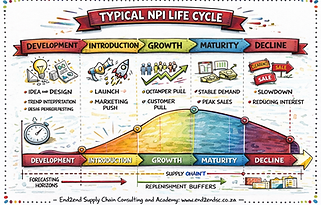
Product Life Cycle (PLC)
A practical, exam‑ready guide to Product Life Cycle (PLC): what changes across Introduction, Growth, Maturity and Decline, how to measure each stage, and how to adjust planning and supply strategies.

Category:
Operations & Capacity
SCOR Process:
Transform, Plan, Orchestrate
Level:
Exam-Ready
Production Activity Control
Production Activity Control — Production activity control manages production execution at the shortest planning horizon. It releases work, controls priorities, tracks performance and manages work-in-process so actual production follows the plan.

Category:
Continuous Improvement (CI) / Operational Excellence
SCOR Process:
Orchestrate, Plan, Source, Transform, Fulfill, Return
Level:
Exam-Ready
Quality Tools and Continuous Improvement
Quality Tools and Continuous Improvement — Quality and continuous improvement use structured methods to identify causes, reduce variation and improve process performance. This article summarizes the improvement mindset and core problem-solving logic emphasized in CSCP.

Category:
Continuous Improvement (CI) / Operational Excellence
SCOR Process:
Orchestrate, Source, Transform, Fulfill, Return
Level:
Exam-Ready
Quality Tools and Continuous Improvement Methods
Quality Tools and Continuous Improvement Methods — Quality management and continuous improvement provide disciplined ways to identify problems, understand causes, reduce variation and improve supply chain performance. This guide connects core quality principles with practical improvement tools.


Category:
Supply Chain Risk
SCOR Process:
Orchestrate, Plan, Source, Transform, Fulfill, Return
Level:
Exam-Ready
Risk Identification and Supply Chain Risks
Risk Identification and Supply Chain Risks — Risk identification searches systematically for threats and opportunities across the supply chain, documents their causes and impacts, and establishes a consistent basis for later analysis and response.
Category:
Supply Chain Risk
SCOR Process:
Orchestrate, Plan
Level:
Exam-Ready
Risk Management Frameworks for Supply Chain
Risk Management Frameworks for Supply Chain — Supply chain risk management uses a structured cycle to identify, assess, respond to and monitor uncertainty. Frameworks such as COSO ERM, GRC and ISO 31000 provide common approaches and terminology.
Category:
Supply Chain Risk
SCOR Process:
Orchestrate, Plan
Level:
Exam-Ready
Risk Registers and Risk Documentation
Risk Registers and Risk Documentation — A risk register is the controlled record of identified risks, their characteristics, analysis and planned responses. It allows the organization to monitor risk consistently over time.
Category:
Supply Chain Risk
SCOR Process:
Orchestrate, Plan, Source, Fulfill
Level:
Exam-Ready
Risk Responses and Mitigation Strategies
Risk Responses and Mitigation Strategies — Risk responses convert analysis into action. Common approaches include avoiding, reducing, transferring or accepting risk, supported by action plans, triggers and contingency measures.
Category:
Supply Chain Risk
SCOR Process:
Orchestrate, Plan
Level:
Exam-Ready
Risk Responses, Action Plans and Business Continuity
Risk Responses, Action Plans and Business Continuity — Risk response converts analysis into action through accept, avoid, transfer/share and mitigate strategies, supported by preventive and contingent plans and business-continuity arrangements.

Category:
Supplier Management
SCOR Process:
Source, Orchestrate
Level:
Exam-Ready
SRM Services and Procurement
SRM Services and Procurement — SRM services combine procurement tools, supplier information and collaboration capabilities to streamline sourcing transactions while supporting supplier development and shared planning.

Category:
Planning & S&OP
SCOR Process:
Plan, Orchestrate
Level:
Exam-Ready
Sales and Operations Planning (S&OP)
Sales and Operations Planning (S&OP) — S&OP converts the business plan into a coordinated demand, supply and financial plan. Learn the role of master planning, resource planning, consensus and the one-number approach.
Category:
Sourcing Strategy
SCOR Process:
Source, Orchestrate
Level:
Exam-Ready
Single Sourcing vs Multisourcing vs Sole Sourcing
Single Sourcing vs Multisourcing vs Sole Sourcing — Single sourcing, multisourcing and sole sourcing describe different supply situations. Understanding the distinction is essential because the choice influences leverage, collaboration, continuity and supply risk.

Category:
Sourcing Strategy
SCOR Process:
Source, Orchestrate
Level:
Exam-Ready
Sourcing Requirements and Total Cost
Sourcing Requirements and Total Cost — Sourcing requirements go beyond price. They define the cost, quality, delivery, lead-time, capacity, design, time-to-market and sustainability needs that potential sources must satisfy, while total cost exposes hidden trade-offs.
Category:
Supply Chain Relationships & Collaboration
SCOR Process:
Source, Orchestrate
Level:
Exam-Ready
Strategic Alliances and Alliance Development
Strategic Alliances and Alliance Development — Strategic alliances are high-collaboration relationships in which organizations share information, jointly plan and may jointly invest to improve mutual supply-chain performance.
Category:
Supply Chain Relationships & Collaboration
SCOR Process:
Source, Orchestrate
Level:
Exam-Ready
Strategic Sourcing Using SRM
Strategic Sourcing Using SRM — Supplier relationship management supports strategic sourcing by improving visibility, collaboration, supplier information and the tools used to identify, evaluate and manage supply partners.
Category:
Supply Chain Relationships & Collaboration
SCOR Process:
Source, Orchestrate
Level:
Exam-Ready
Strategic Sourcing and Alliances
Strategic Sourcing and Alliances — Strategic sourcing extends beyond transactional buying by considering total cost, supplier capability, collaboration and long-term relationships. Strategic alliances deepen selected relationships where shared information, joint planning and investment can improve both parties’ performance.
Category:
Supplier Management
SCOR Process:
Source, Orchestrate
Level:
Exam-Ready
Supplier Certification
Supplier Certification — Supplier certification provides formal evidence that a supplier meets defined requirements or third-party standards. Certification can reduce inspection effort, reinforce quality expectations and support closer supplier relationships.

Category:
Supplier Management
SCOR Process:
Source, Orchestrate
Level:
Exam-Ready
Supplier Evaluation and Selection
Supplier Evaluation and Selection — Supplier selection converts sourcing strategy into a purchasing decision. It establishes selection criteria, evaluates supplier capabilities and value-added services, negotiates terms and supports effective contract deployment.
Category:
Supplier Management
SCOR Process:
Source, Orchestrate
Level:
Exam-Ready
Supplier Performance Management
Supplier Performance Management — Supplier performance management establishes expectations, measures results, identifies gaps and works with suppliers to correct and improve performance over time.
Category:
Supplier Management
SCOR Process:
Source, Orchestrate
Level:
Exam-Ready
Supplier Performance Measurement
Supplier Performance Measurement — Supplier performance measurement turns supplier expectations into observable results so the organization can compare performance, focus improvement and support sourcing decisions.

Category:
Supply Chain Relationships & Collaboration
SCOR Process:
Source, Orchestrate
Level:
Exam-Ready
Supplier Segmentation and Relationships
Supplier Segmentation and Relationships — Supplier segmentation differentiates supplier relationships according to supply risk, strategic importance and mutual dependence so management effort is focused where it creates the greatest value.

Category:
Supplier Management
SCOR Process:
Source, Orchestrate
Level:
Exam-Ready
Supply Base Analysis and Right-Sizing
Supply Base Analysis and Right-Sizing — Supply base analysis combines spend analysis and supply-market research to find the categories with the greatest improvement opportunity and determine where supplier consolidation or other right-sizing actions may create value.
Category:
Strategy & Optimisation
SCOR Process:
Orchestrate, Plan, Source, Fulfill
Level:
Exam-Ready
Supply Chain Agility and Adaptability
Supply Chain Agility and Adaptability — Agility and adaptability help supply chains respond to near-term change while evolving capabilities and network choices as markets, risks and customer needs change.
Category:
Strategy & Network Design
SCOR Process:
Orchestrate, Plan
Level:
Exam-Ready
Supply Chain Design and Network Optimisation
Supply Chain Design and Network Optimisation — Supply chain design translates business and supply chain strategy into a network of facilities, processes, sourcing choices, technologies and flows that support the chosen competitive priorities.
Category:
Governance & Sustainability
SCOR Process:
Orchestrate, Source
Level:
Exam-Ready
Supply Chain Ethics and Compliance
Supply Chain Ethics and Compliance — Ethics and compliance shape sourcing, supplier relationships, sustainability and risk decisions across the supply chain and help protect trust, reputation and legal standing.

Category:
Supply Chain Fundamentals
SCOR Process:
Plan, Order, Source, Transform, Fulfill, Return, Orchestrate
Level:
Exam-Ready
Supply Chain Flows and Echelons
Understand how product, information and cash move across supply chain echelons — and how to design the network so service improves while inventory and working capital drop.
Category:
Technology & Data
SCOR Process:
Orchestrate
Level:
Exam-Ready
Supply Chain Master Data
Supply Chain Master Data — Master data describe the core entities of the supply chain. Effective master data management creates accurate, consistent, complete and timely information across systems and partners.
Category:
Strategy & Governance
SCOR Process:
Plan, Source, Order, Transform, Fulfill, Return, Orchestrate
Level:
Practitioner
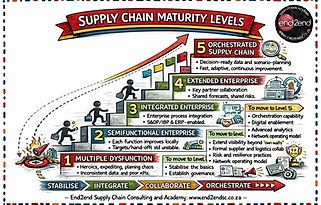
Supply Chain Maturity
Benchmark your end-to-end supply chain across process, people, data, and governance—then build a realistic roadmap to move from firefighting to predictable, resilient performance.
Category:
Performance & Metrics
SCOR Process:
Orchestrate, Plan, Source, Order, Transform, Fulfill, Return
Level:
Exam-Ready
Supply Chain Metrics and SCOR DS
Supply Chain Metrics and SCOR DS — A supply chain measurement system should connect metrics to strategy, present performance clearly and support improvement. SCOR DS provides a structured framework for processes, metrics and digital capabilities.
Category:
Strategy & Optimisation
SCOR Process:
Orchestrate, Plan
Level:
Exam-Ready
Supply Chain Optimisation Tools and Models
Supply Chain Optimisation Tools and Models — Optimization tools and models help decision makers compare network, capacity, inventory and service alternatives using structured analysis, scenarios and trade-off evaluation.
Category:
Supply Chain Relationships & Collaboration
SCOR Process:
Order, Source, Fulfill, Orchestrate
Level:
Exam-Ready
Supply Chain Relationship Management
Supply Chain Relationship Management — Supply chain relationship management connects customer relationship management and supplier relationship management so value can be coordinated across both sides of the supply chain.
Category:
Supply Chain Risk
SCOR Process:
Orchestrate, Plan
Level:
Exam-Ready
Supply Chain Risk Management
Supply Chain Risk Management — Supply chain risk management provides a disciplined process for identifying, assessing, responding to and monitoring uncertainty that can affect supply chain objectives.

Category:
Strategy & Optimisation
SCOR Process:
Orchestrate, Plan
Level:
Exam-Ready
Supply Chain Strategic Value and Optimisation
Supply Chain Strategic Value and Optimisation — Strategic supply chain value comes from improving customer outcomes and financial performance through better cost, service, asset and risk decisions across the end-to-end network.
Category:
Strategy & Governance
SCOR Process:
Orchestrate, Plan
Level:
Exam-Ready
Supply Chain Strategic Value and Optimization
Supply Chain Strategic Value and Optimization — Supply chain optimization begins with strategic alignment and a clear value proposition. It examines how capabilities, value streams, core competencies and cost structures combine to create stakeholder value.

Category:
Planning & Forecasting
SCOR Process:
Orchestrate, Plan, Source, Order, Transform, Fulfill, Return
Level:
Exam-Ready
Supply Chain Through the SCOR Lens (SCOR DS)
Stop describing supply chain as departments. Use SCOR to describe it as an end-to-end system of processes (Orchestrate, Plan, Source, Order, Transform, Fulfill, Return) and make performance comparable and improvable.
Category:
Planning & S&OP
SCOR Process:
Plan, Orchestrate
Level:
Exam-Ready
Supply and Demand Alignment
Supply and Demand Alignment — Supply and demand alignment links demand management, production planning, resource planning, master scheduling and execution so the organization can balance demand, supply and financial requirements.

Category:
Sustainability
SCOR Process:
Orchestrate, Source
Level:
Exam-Ready
Sustainability Guidelines and Standards
Sustainability Guidelines and Standards — Sustainability guidelines and standards help organizations structure environmental, social and governance practices, reporting and certification. CSCP highlights international frameworks including the UN Global Compact, OECD guidance, GRI and ISO-related standards.
Category:
Sustainability
SCOR Process:
Orchestrate, Plan, Source, Transform, Fulfill, Return
Level:
Exam-Ready
Sustainable Supply Chains
Sustainable Supply Chains — Sustainable supply chains balance economic, environmental and social performance so present needs can be met without compromising the ability of future generations to meet theirs.
Category:
Technology & Digital Supply Chain
SCOR Process:
Orchestrate, Plan
Level:
Exam-Ready
Technology Assessment and Implementation
Technology Assessment and Implementation — Technology assessment and implementation connect business requirements with technology choices, investment decisions, project controls and post-implementation review so technology creates measurable supply-chain value.

Category:
Planning & Forecasting
SCOR Process:
Plan, Order, Source, Transform, Fulfill, Orchestrate
Level:
Exam-Ready
The Bullwhip Effect
The Bullwhip Effect is a critical concept in supply chain management that describes the phenomenon where small changes in consumer demand at the retail level cause progressively larger fluctuations in inventory orders as they move up the supply chain. These fluctuations can create inefficiencies, higher costs, and operational challenges throughout the entire supply chain network. Understanding the Bullwhip Effect is essential for managing a resilient and efficient supply chain, especially in today’s complex, globalized markets.

Category:
Trade & Compliance
SCOR Process:
Orchestrate, Plan, Fulfill
Level:
Exam-Ready
Trade Zones and Trade Blocs
Trade Zones and Trade Blocs — Trade zones and trade blocs change the economics and rules of cross-border supply chains. Managers need to understand how special trade arrangements influence duties, market access and network decisions.

Category:
Transportation
SCOR Process:
Fulfill, Orchestrate
Level:
Exam-Ready
Transportation Modes and Carrier Selection
Transportation Modes and Carrier Selection — Road, rail, ocean, air and pipeline modes offer different combinations of speed, cost, capacity and flexibility. Carrier selection adds service, reliability and capability considerations.


Category:
Strategy & Network Design
SCOR Process:
Plan, Source, Transform, Fulfill, Orchestrate
Level:
Exam-Ready
Vertical and Horizontal Integration Models
A practical guide to vertical and horizontal integration in supply chains - models, trade-offs, metrics, governance, and exam cues. When to Own, Partner, or Consolidate

Category:
Warehousing
SCOR Process:
Fulfill, Plan, Orchestrate
Level:
Exam-Ready
Warehouse Location and Network Decisions
Warehouse Location and Network Decisions — Warehouse location decisions balance customer proximity, transportation, facility cost, inventory and service requirements across the distribution network.

Category:
Sustainability & Reverse Flow
SCOR Process:
Return, Orchestrate, Transform
Level:
Exam-Ready
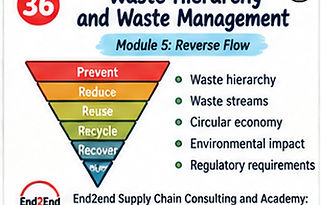
Waste Hierarchy and Waste Management
Waste Hierarchy and Waste Management — Waste management prioritizes preventing and reducing waste before reuse, recycling, recovery and final disposal. The hierarchy supports both environmental and economic supply chain objectives.
End2end Knowledge Vault
Trusted supply chain truth — defined, referenced, and translated into practical playbooks by End2End experts.